 FITSTUD.IO
Why Your Joints Feel Beat Up—Even If Your Muscles Feel Fine
You finish a workout feeling strong, but the next day your knees ache during squats, your hips feel tight, or your shoulders click during presses. You stretch a little, maybe foam roll for a minute, and hope it goes away.
For many lifters, joint discomfort isn’t a sign of weakness—it’s a sign of incomplete recovery.
Muscles often bounce back quickly. Joints, tendons, and connective tissue don’t. That’s where joint-focused recovery protocols come in. When done consistently, they improve readiness, reduce soreness, and help you train hard without constantly feeling worn down.
This guide will show you how to apply joint-focused recovery protocols specifically for the knees, hips, and shoulders, using simple, repeatable strategies that fit into a real training week.
What Joint-Focused Recovery Actually Means
Joint-focused recovery protocols are intentional recovery strategies designed to support the structures around a joint—ligaments, tendons, cartilage, and the muscles that stabilize movement.
Unlike general stretching, these protocols aim to:
- Restore joint range of motion
- Improve load tolerance
- Reduce chronic stiffness and irritation
- Keep movement patterns clean under fatigue
For lifters, this matters because compound exercises—squats, deadlifts, presses, rows—place repeated stress on the same joints week after week. Without proper recovery, small issues quietly stack up.
Joint-focused recovery protocols don’t replace smart programming. They support it, allowing you to train consistently instead of constantly backing off due to discomfort.
Knee Recovery Protocols That Support Squats and Lunges
Your knees rarely fail on their own. Most knee discomfort comes from limited ankle mobility, poor hip control, or insufficient quad and hamstring tolerance.
A smart knee recovery protocol focuses on movement quality, not aggressive stretching.
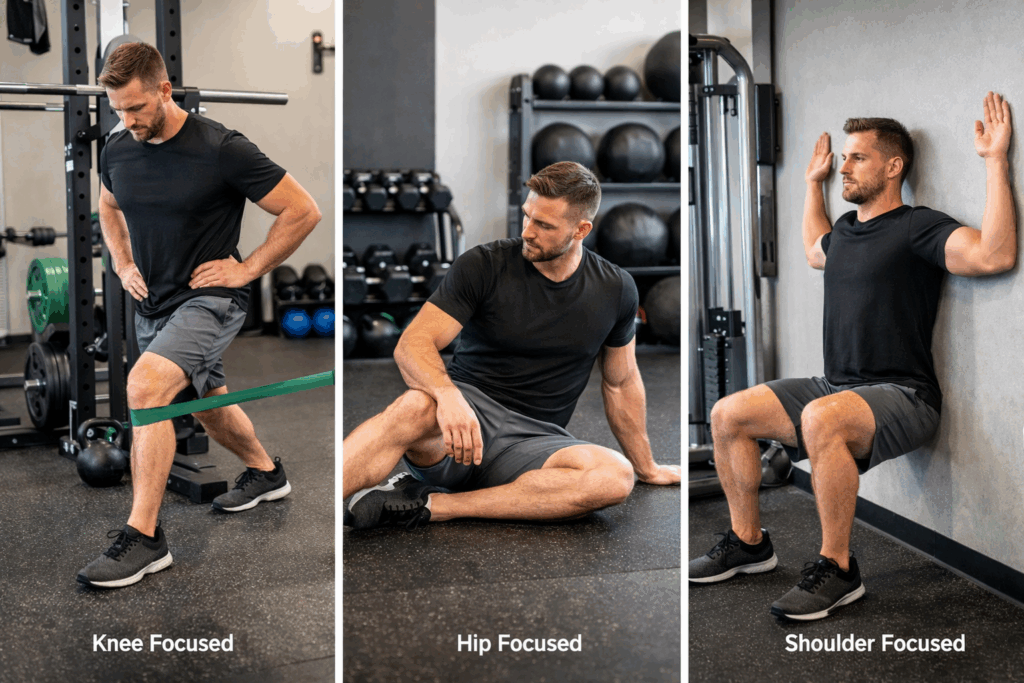
Low-load knee extensions are a powerful starting point. Light banded or machine knee extensions performed slowly help circulate blood, nourish connective tissue, and rebuild confidence through range. Keep the load easy and the tempo controlled.
Terminal knee extensions (TKEs) are another staple. Using a light band, focus on locking out the knee while keeping the quad engaged. This reinforces stability without joint stress and pairs well as a warm-up or finisher on lower-body days.
Finally, supported split squats or step-downs at low intensity help the knee tolerate real movement. Done with control and a short range of motion, they reinforce strength where lifters often feel unstable.
The goal isn’t to chase fatigue. It’s to remind the knee that it can move smoothly and safely.
Hip Recovery Protocols for Better Squats and Deadlifts
The hips are the engine of most lifts. When they lose mobility or control, the knees and lower back usually pay the price.
Effective hip-focused recovery protocols emphasize controlled mobility rather than passive stretching alone.
90/90 hip rotations are one of the most efficient tools you can use. Moving slowly between internal and external rotation builds usable range that transfers directly to squats and deadlifts.
Glute-focused activation, such as banded bridges or lateral walks, restores hip stability after heavy training days. Think of these as “resetting” your hips so they don’t default to stiffness.
Adding low-intensity cyclical movement, like sled drags or incline walking, also supports hip recovery. These movements encourage blood flow without compressing the joint, making them ideal on recovery days.
When hips feel better, squats feel deeper, deadlifts feel smoother, and your body stops compensating.
Shoulder Recovery Protocols That Protect Pressing and Pulling
Shoulders take a beating from benching, overhead pressing, rows, and pull-ups. When recovery is ignored, lifters often blame their rotator cuff when the real issue is poor shoulder mechanics under fatigue.
Joint-focused recovery protocols for shoulders should prioritize scapular control and gentle range of motion.
Controlled hanging or assisted hangs decompress the shoulder joint and restore overhead tolerance. Keep the grip relaxed and focus on breathing rather than duration.
Scapular wall slides are excellent for reinforcing upward rotation and posture. Done slowly, they retrain the shoulders to move without pinching or clicking.
Light external rotation work, especially with bands, helps maintain shoulder balance. This isn’t about burning out small muscles—it’s about reminding them to show up during pressing.
If your shoulders feel better outside the gym, they’ll perform better under the bar.
How to Layer Joint-Focused Recovery Into Your Week
Joint-focused recovery protocols work best when they’re strategic, not random.
Short sessions—10 to 15 minutes—can be added at the end of workouts or on off days. Think of them as maintenance, not extra training.
Pair knee protocols with squat days, hip protocols with deadlift days, and shoulder protocols with upper-body sessions. This keeps recovery specific and efficient.
On lighter days, combining multiple joints into a short circuit can work well. For example, a recovery-focused session might include hip rotations, knee extensions, and shoulder mobility performed at conversational intensity.
For a full breakdown of how to autoregulate recovery intensity, check out our guide on [Internal Link Placeholder: Understanding RPE for Smarter Training].
Why Lifters Struggle With Joint Recovery and How to Fix It
Many lifters treat recovery like an emergency response—something they only address once pain shows up. By then, irritation has already accumulated, making recovery slower and more frustrating.
Another common issue is doing too much too aggressively. Long stretching sessions, excessive foam rolling, or high-rep band work can leave joints feeling more irritated, not less. Recovery should leave you feeling better when you stand up, not looser but unstable.
Consistency is the real fix. Small, repeatable joint-focused recovery protocols done weekly will outperform any single “perfect” recovery session done once a month.
Train Hard, Recover Smarter, and Keep Your Joints in the Game
Joint discomfort doesn’t mean you’re broken. It usually means your recovery system needs structure.
By using joint-focused recovery protocols for the knees, hips, and shoulders, you give your body the tools it needs to stay ready, resilient, and confident under load.
Strong training isn’t just about what you lift—it’s about how well you recover between sessions.
If you’re tired of training around aches instead of through progress, it’s time to make recovery part of your plan.
Should You Train When You Don’t Feel Like It? A Coach’s Honest Answer
The Question Every Lifter Eventually Faces Have you ever stood in your gym clothes, staring at the clock, hoping motivation
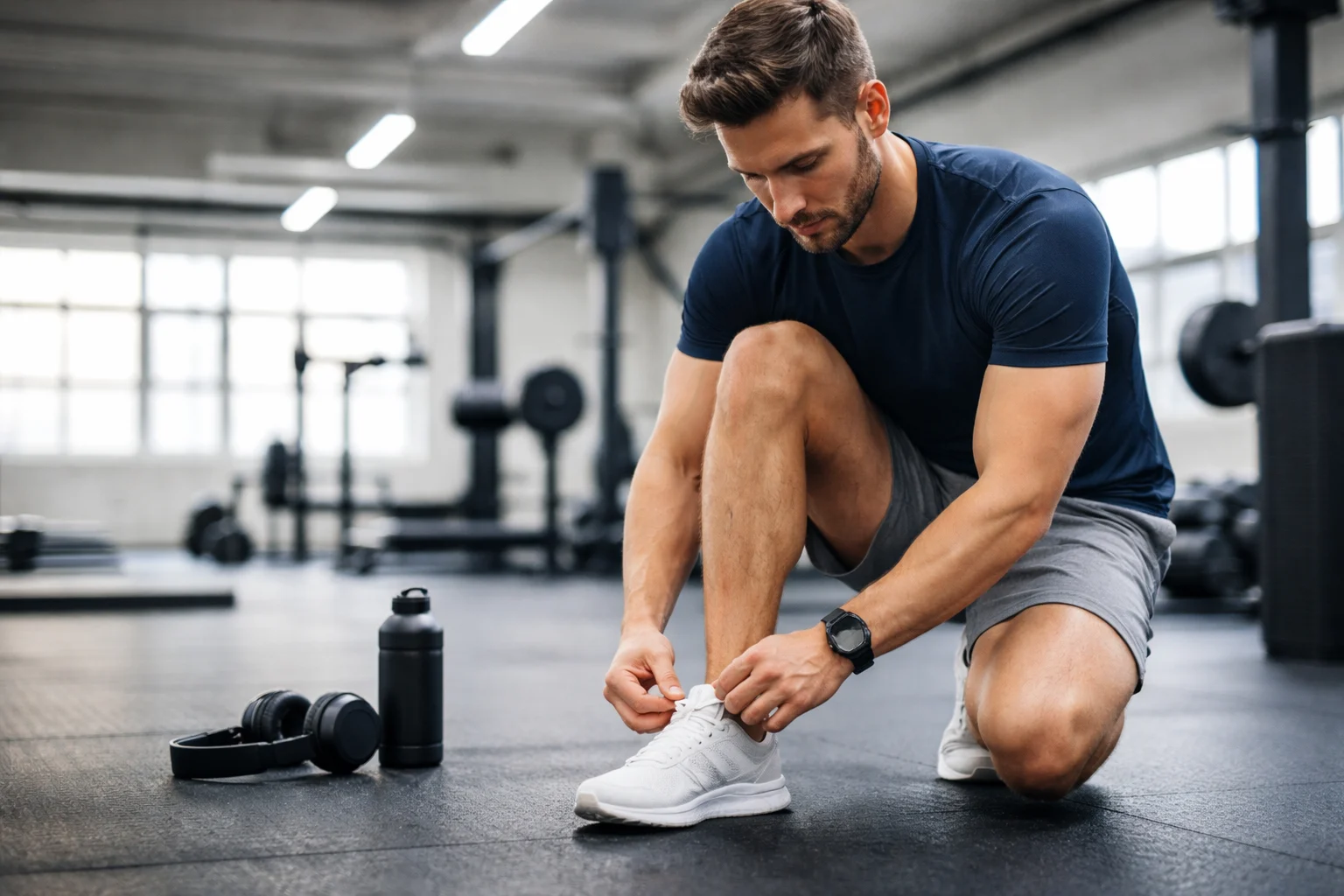
How Long Does It Really Take to Build a Fitness Habit?
How long does it take to build a fitness habit? Learn the real timeline, common mistakes, and proven strategies to stay consistent long term.