 FITSTUD.IO
Protein Powders Compared: Whey vs Casein vs Plant-Based
Why Protein Powder Feels So Confusing
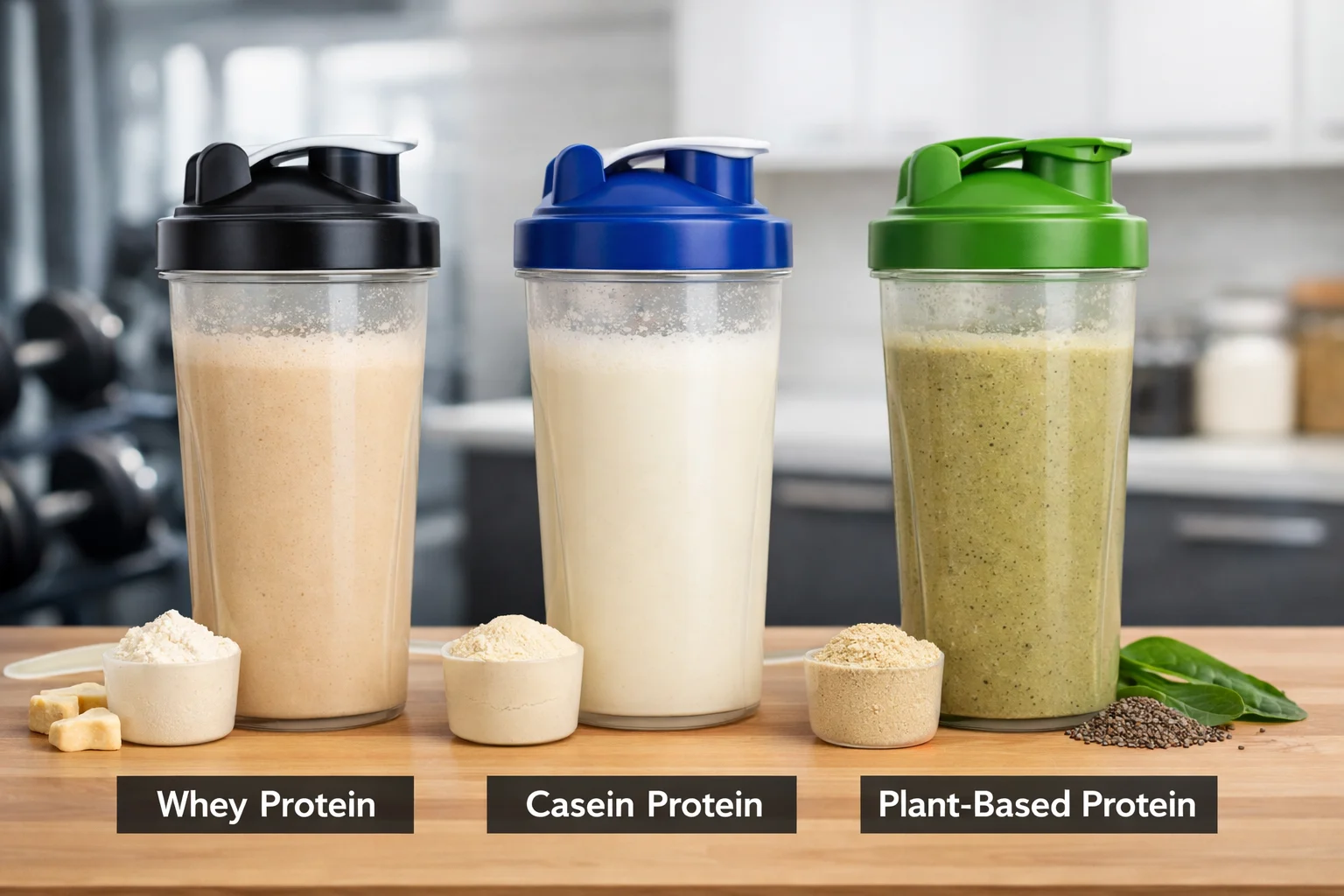
Walk into any supplement store and you’ll see shelves packed with protein powders promising muscle, recovery, and fat loss. Whey. Casein. Plant-based blends. Isolates. Concentrates. It’s easy to feel like you’re making the wrong choice—or worse, that you need all of them.
Here’s the truth: protein powder is a tool, not magic. When you understand how each type works, choosing the right one becomes simple. This guide breaks down whey vs casein vs plant-based protein so you can match the right option to your training goals, schedule, and digestion.
Understanding Protein Powders (Without the Marketing Hype)
Protein powder exists to help you hit your daily protein intake more consistently. Muscle growth, recovery, and strength adaptations depend on consuming enough high-quality protein across the day.
The key differences between protein powders come down to:
- Source
- Digestion speed
- Amino acid profile
- Practical use timing
All three options—whey, casein, and plant-based—can support muscle growth when total protein intake is adequate. The best choice depends on how and when you use it, not which label sounds most impressive.
Whey Protein: Fast, Efficient, and Training-Friendly
Whey protein is derived from milk and digests quickly, making it ideal around workouts. It’s rich in leucine, the amino acid most responsible for triggering muscle protein synthesis.
Because it absorbs rapidly, whey is excellent when your muscles need nutrients fast—especially post-training.
Why lifters love whey:
- Rapid digestion supports recovery
- Complete amino acid profile
- Easy to mix and widely available
Whey works best when taken after training or between meals. If your workout finishes and you won’t eat a full meal for a while, whey fills that gap efficiently.
Casein Protein: Slow, Steady, and Recovery-Focused
Casein also comes from milk, but it digests much more slowly. Instead of a rapid spike in amino acids, it provides a steady release over several hours.
That makes casein especially useful during long gaps without food—like overnight.
Why casein has a place in your routine:
- Slower digestion supports prolonged recovery
- Helps reduce muscle breakdown
- Promotes fullness and satiety
Casein shines before bed or during long stretches between meals. It’s not better than whey—it just plays a different role.
Plant-Based Protein: Flexible, Digestive-Friendly, and Improving Fast
Plant-based protein powders are typically made from peas, rice, hemp, soy, or blended sources. On their own, some plant proteins lack certain amino acids—but blends solve this problem.
Modern plant-based proteins can fully support strength training when dosed appropriately.
Why plant-based protein is a strong option:
- Suitable for dairy-free or vegan diets
- Often easier on digestion
- Highly versatile with proper formulation
Plant-based protein works well anytime during the day, especially when paired with whole foods. Slightly higher servings help ensure sufficient leucine intake.
How to Choose the Right Protein Powder for You
This is where theory turns into action. Instead of asking which protein is “best,” ask how you’ll actually use it.
Match Protein to Your Training Schedule
If you train hard and want fast recovery, whey protein post-workout makes sense. If your schedule delays meals, casein or plant-based protein can keep you covered until your next plate of real food.
Choose Based on Digestion, Not Trends
If dairy causes bloating or discomfort, forcing whey or casein won’t help progress. A plant-based blend you tolerate well will outperform a “better” protein you avoid using.
Use Protein to Support Total Intake
Protein powder isn’t a replacement for meals—it’s a consistency tool. Use it to bridge gaps when whole food protein falls short. For help dialing in total intake, you could link readers to your macros or protein intake guide here.
Keep It Simple and Repeatable
One protein powder you enjoy and use daily beats three tubs collecting dust. Consistency builds results, not variety.
Where Most Lifters Go Wrong with Protein Powders
Many beginners assume protein powder alone builds muscle, then wonder why progress stalls. Muscle growth still requires progressive training, adequate calories, and recovery. Protein supports the process—it doesn’t replace it.
Another common issue is overcomplicating timing. Missing a “perfect” post-workout shake doesn’t cancel gains. Daily intake matters far more than minute-by-minute precision.
Finally, lifters often chase premium labels while ignoring digestion. If a protein leaves you bloated, inconsistent, or skipping shakes altogether, it’s working against you.
Bringing It All Together for Long-Term Progress
When comparing whey vs casein vs plant-based protein, remember this: all three can support muscle growth when used correctly. The best protein powder is the one that fits your routine, digestion, and goals.
Hit your daily protein target. Train with intent. Recover well. Repeat consistently.
Related Posts

Should You Train When You Don’t Feel Like It? A Coach’s Honest Answer
The Question Every Lifter Eventually Faces Have you ever stood in your gym clothes, staring at the clock, hoping motivation

How Long Does It Really Take to Build a Fitness Habit?
How long does it take to build a fitness habit? Learn the real timeline, common mistakes, and proven strategies to stay consistent long term.