 FITSTUD.IO
The Best Power Exercises for Field & Court Sports
Why Looking Strong Isn’t the Same as Playing Explosive
If you lift regularly, you might feel strong in the gym—but then step onto the field or court and wonder why that strength doesn’t fully translate. Your squat is solid. Your bench is respectable. Yet sprinting, jumping, cutting, or reacting still feels slow or clunky.
That gap usually comes down to power. Specifically, how quickly you can apply force. This article breaks down the best power exercises for field and court sports, so your training actually shows up when it matters most.
Power Training Explained (Without the Jargon)
Power is the combination of strength and speed. It’s not just about how much force you can produce, but how fast you can produce it. For athletes and recreational players alike, power drives first-step quickness, vertical jump, explosive changes of direction, and reactive movement.
The mistake many lifters make is training only slow, heavy lifts. While strength is important, field and court sports demand rapid force production—often from awkward positions and multiple planes of motion. The best power exercises for field and court sports train you to express strength explosively, not just grind through reps.
How to Apply Power Training in Your Workouts
Lower-Body Power That Transfers
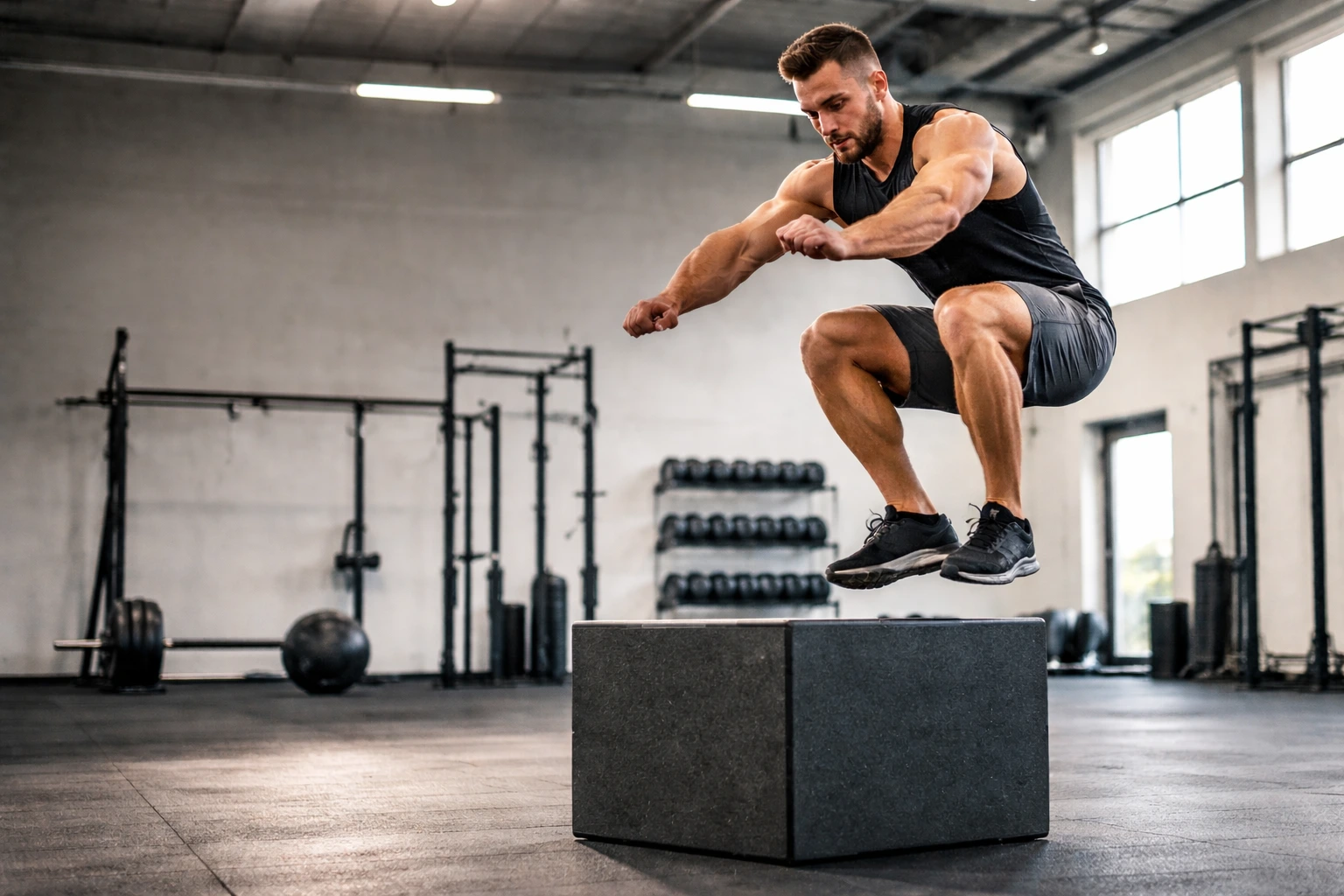
Lower-body explosiveness is the foundation of sprinting, jumping, and cutting. Exercises like trap bar jump deadlifts, box jumps, and broad jumps teach you to generate force quickly through the hips and legs.
A simple approach is to place one of these movements early in your workout, right after your warm-up. Keep reps low—usually 3–5 per set—and focus on maximal intent. Every rep should look fast and crisp. If speed drops off, the set is done.
Rotational Power for Real-World Sports
Most field and court sports are rotational. Think throwing, swinging, passing, or shooting. This is where medicine ball throws shine. Rotational throws, scoop tosses, and overhead slams build power through the core while coordinating hips, torso, and upper body.
These movements are especially valuable because they don’t require heavy loads. You can train power without beating up your joints. For lifters who feel “stiff” or disconnected in sport, rotational power work is often the missing link.
Upper-Body Explosiveness Beyond the Bench Press
Traditional pressing builds strength, but it doesn’t always build speed. Exercises like plyometric push-ups, medicine ball chest passes, and push presses help bridge that gap.
Instead of slow, controlled reps, these movements emphasize rapid force production. Think of pushing the ground or the ball away from you violently, not just completing the rep. This mindset shift alone can improve carryover to sport.
Pairing Strength and Power for Better Results
One of the most effective strategies is pairing a heavy lift with an explosive movement. For example, a set of squats followed by a set of jumps. The heavy lift primes the nervous system, while the explosive movement teaches you to use that strength quickly.
This method works best when volume is controlled. You’re not trying to exhaust yourself—you’re trying to move well. For a deeper dive into how intensity plays a role, you could link readers to a guide on RPE and autoregulated training here.
Where Most Beginners Go Wrong
The biggest issue isn’t exercise selection—it’s intent. Many lifters turn power training into conditioning by adding too many reps or rushing rest periods. When fatigue takes over, speed disappears, and the exercise stops being about power altogether.
Another common problem is treating power exercises like accessories. These movements demand focus and quality. Sloppy jumps or half-speed throws don’t build explosiveness; they reinforce bad habits. Power training works best when you’re fresh, intentional, and willing to stop before fatigue ruins the output.
Turning Gym Strength Into Game-Day Performance
Power is what connects the weight room to the field or court. When you prioritize the best power exercises for field and court sports, you stop training just to look fit and start training to move better, react faster, and perform with confidence.
You don’t need endless drills or advanced programming. You need the right movements, placed intentionally, with effort behind every rep.
Related Posts
Should You Train When You Don’t Feel Like It? A Coach’s Honest Answer
The Question Every Lifter Eventually Faces Have you ever stood in your gym clothes, staring at the clock, hoping motivation
How Long Does It Really Take to Build a Fitness Habit?
How long does it take to build a fitness habit? Learn the real timeline, common mistakes, and proven strategies to stay consistent long term.